
What is the impact of policy on Passive House adoption?
Project Location: Zone 0A Extremely Hot Humid
Simulation Scale: Urban Scale
Application: Research
Audience: Public/Stakeholder
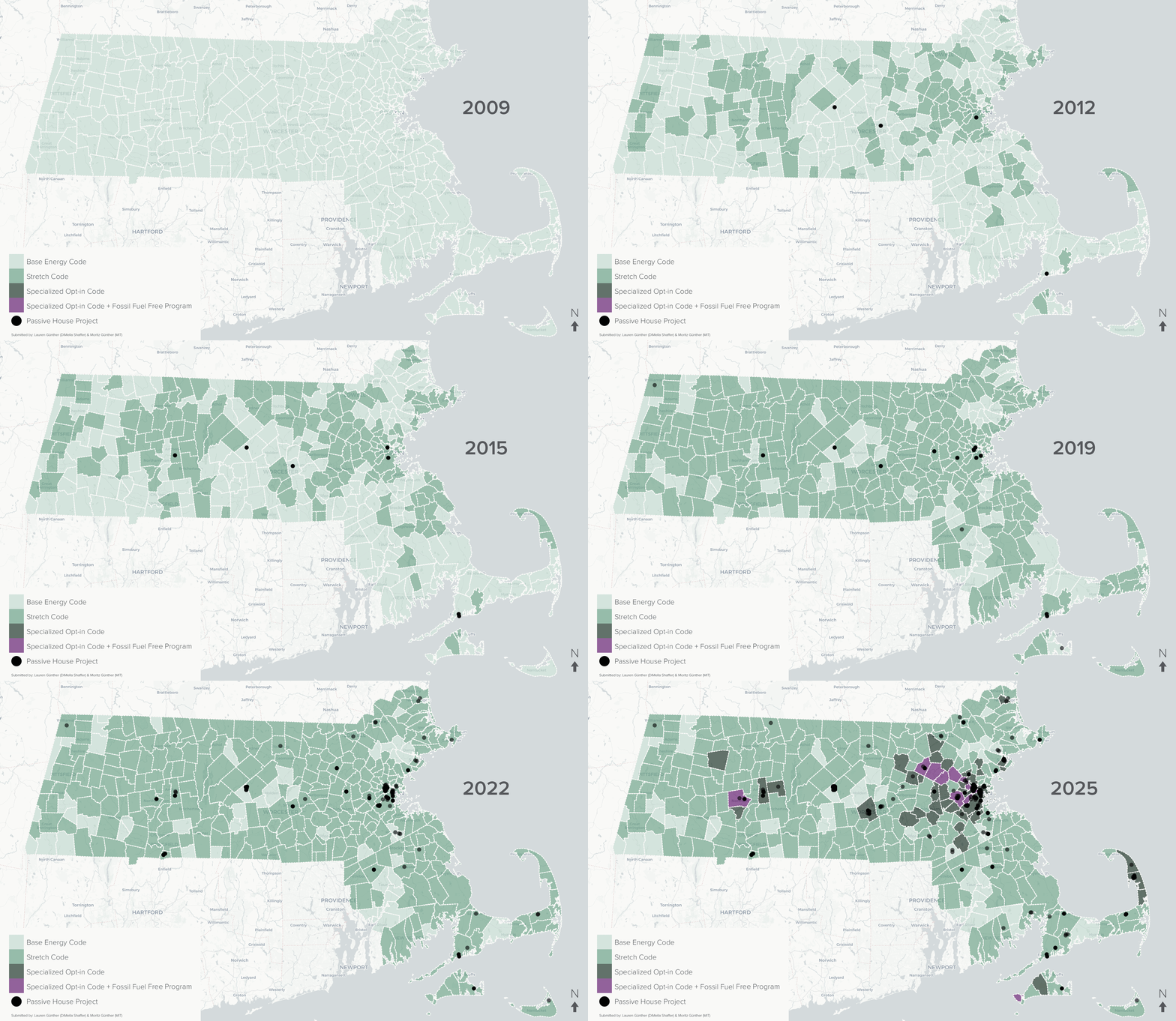
What is this graphic showing? Describe the different parts of the graphic and how it communicates the data.
To solve big problems, we need to ask bold questions. Passive House design offers a powerful answer by delivering significant reductions in energy demand. At the end of 2022, Massachusetts enacted the Specialized Opt-in Code, which municipalities can adopt through a local voting process. This code requires Passive House certification for multi-family buildings over 12,000 sf. The map shows a clear correlation between the adoption of this more stringent energy code and a rise in Passive House projects following 2022.
What type of graphic is this?
- Animated gif
Design Variables
- Passive strategies
What tools did you use to create the graphic?
- Adobe Photoshop
- Javascript
- Python
What was successful and/or unique about the graphic in how it communicates information?
By animating the evolution of Massachusetts’ energy code map alongside the emergence of Passive House projects, we create a compelling visual story that allows readers to see the connection to their own communities and built environment. The graphic connects policy makers who think in larger municipal scales, to architects, who think at the project level.
Is there anything else you would like to mention?
Additional credits and other contributors:
Moritz Günther (MIT)Included in the competition:

2025 Annual Project StaSIO Challenge - Deadline May 27th, 2025
March 20, 2025-June 5, 2025